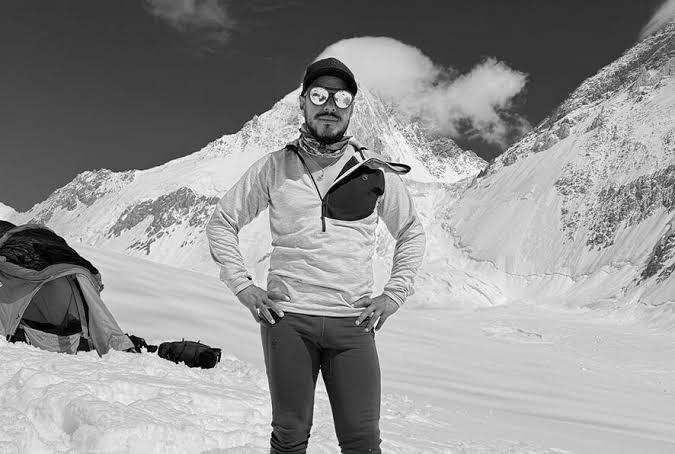
Nirmal “Nims” Purja — the record-breaking Nepalese mountaineer known worldwide from the Netflix film 14 Peaks: Nothing Is Impossible — has died in an avalanche on Broad Peak in Pakistan. After days of uncertainty in which he was reported missing, his death was confirmed on 1 August 2026 and his body recovered.
Purja, 43, was leading an expedition for his company Elite Exped when an avalanche struck a group of climbers on Broad Peak — at 8,051 metres, the world’s 12th-highest mountain — in Pakistan’s Gilgit-Baltistan region on Thursday, 30 July 2026. He was among ten people initially reported missing after the slide.
What we know so far
- Who: Nirmal “Nimsdai” Purja, 43, one of the world’s most celebrated high-altitude mountaineers.
- What: An avalanche on Broad Peak (8,051 m) that buried a group of climbers.
- Where: The Karakoram range, Gilgit-Baltistan, Pakistan.
- When: The avalanche struck on Thursday, 30 July 2026; his death was confirmed on Saturday, 1 August 2026.
- Status: Ten climbers were caught; several bodies, including Purja’s, were recovered as search operations continued.
The avalanche and the search
According to expedition organisers and Pakistani officials, the avalanche hit around midday as the team was on the mountain. Ten climbers — a mix of experienced guides and clients — went missing. Rescue and recovery efforts were hampered by the altitude, unstable snow and the notoriously difficult terrain of Broad Peak, one of the most technical of the 8,000-metre peaks.
Over the following days, search teams recovered several bodies. Purja’s expedition company, Elite Exped, and his charity, the Nimsdai Foundation, confirmed that he had “tragically lost his life” following the avalanche. His body was recovered from the mountain as operations continued to locate others still missing.
Who was Nims Purja?
Born in Nepal and raised in Chitwan, Nirmal Purja served as a Gurkha in the British Army and later in the UK’s elite Special Boat Service before turning to mountaineering. In 2019 he stunned the climbing world with “Project Possible,” summiting all 14 of the world’s peaks above 8,000 metres in just 189 days — smashing the previous record of nearly eight years. The achievement made him a global icon and was chronicled in the acclaimed 2021 Netflix documentary 14 Peaks: Nothing Is Impossible.
He was widely credited with reshaping the image of Nepali climbers — long the backbone of Himalayan expeditions — as leaders and record-setters in their own right, and he became a source of immense pride across Nepal.
A tragedy during his “Hat Trick” campaign
At the time of his death, Purja was pursuing an ambitious new goal — climbing all 14 eight-thousanders three times over, a project he called his “Hat Trick” campaign. Just days before the avalanche, on 21 July 2026, he had completed an oxygenless ascent of Gasherbrum II, reported as his 57th successful summit of an 8,000-metre peak. Broad Peak was intended to be another step toward that record.
Tributes
News of his death prompted an outpouring of grief from the global climbing community, fans of 14 Peaks, and people across Nepal, where he was celebrated as a national hero. Tributes have described him as fearless, generous and endlessly determined — a mountaineer who inspired a generation. He is survived by his wife, Suchi, and their daughter.
Frequently asked questions
What happened to Nims Purja?
He died in an avalanche on Broad Peak in Pakistan on 30 July 2026 while leading an Elite Exped expedition. After being reported missing, his death was confirmed and his body recovered on 1 August 2026.
How old was Nims Purja?
He was 43.
What was Nims Purja famous for?
He climbed all 14 of the world’s 8,000-metre peaks in 189 days in 2019 (“Project Possible”), a feat featured in the Netflix documentary 14 Peaks: Nothing Is Impossible.
Where is Broad Peak?
Broad Peak is in the Karakoram range in Gilgit-Baltistan, Pakistan. At 8,051 metres it is the 12th-highest mountain in the world and a technically demanding climb.
This is a developing, sensitive story; details may change as officials confirm more. Sources: CNN, The Kathmandu Post, Al Jazeera, ExplorersWeb.