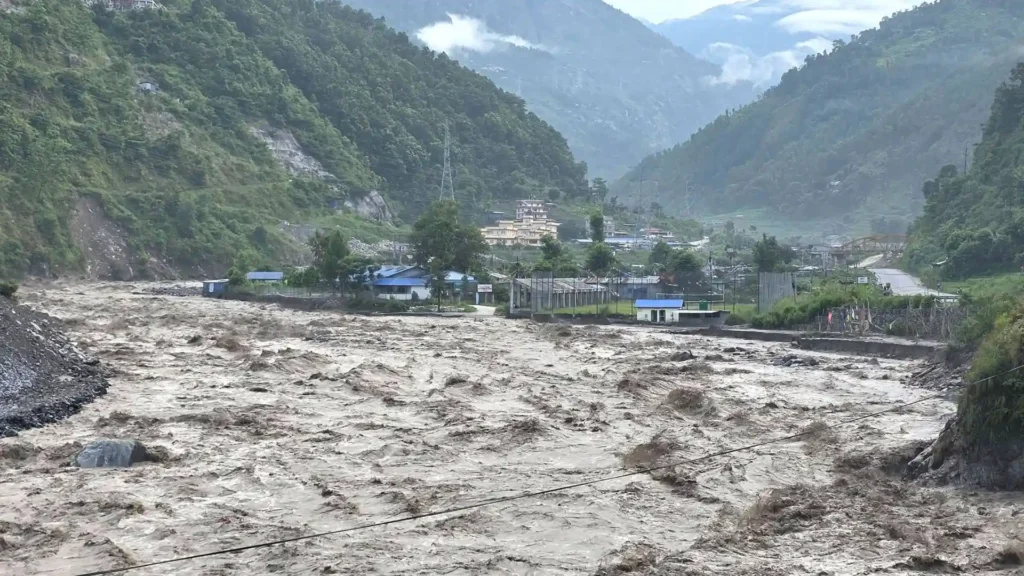
A massive flash flood surged down the Bhotekoshi River from the Tibet side on the morning of Wednesday, 26 August 2026, tearing through Timure and Syabrubesi in Nepal’s Rasuwa district. At least eight people have been killed, several are missing, and hydropower projects, markets, roads and bridges have suffered heavy damage. Downstream districts along the Trishuli have been put on high alert.
Rasuwa flood — key facts
| What | Flash flood surge on the Bhote Koshi (Bhotekoshi) River |
|---|---|
| When | Around 9 am, Wednesday, 26 August 2026 |
| Where | Timure & Syabrubesi, Gosainkunda Rural Municipality, Rasuwa district, Bagmati Province — near the Nepal–China border |
| Origin | Came from the Tibet (China) side; a Glacial Lake Outburst Flood (GLOF) is suspected |
| Casualties | At least 8 dead; several missing, including 9 Armed Police Force personnel (figures rising) |
| Downstream alert | Rasuwa, Nuwakot, Dhading, Gorkha and Chitwan along the Trishuli |
What happened in Rasuwa today
At around 9 am, a sudden, powerful surge of water came down the Bhotekoshi River from the direction of Tibet and slammed into the border settlements of Timure and Syabrubesi (Syaphrubesi) in Gosainkunda Rural Municipality. The floodwaters swept away vehicles, roads, bridges and market areas, with the Syabrubesi market among the worst hit. Timure — a key trade point near the Rasuwagadhi border crossing and dry port with China — was also badly affected.
Casualties and missing
At least eight people have been confirmed dead, and the toll is expected to rise as rescuers reach cut-off areas. Nine Armed Police Force personnel deployed at Timure were reported missing after the flood struck. Some reports have also cited missing workers and foreign nationals in the border area; those figures remain unconfirmed and are changing, so they should be treated with caution until officials verify them.
Hydropower projects damaged
Rasuwa is one of Nepal’s most important hydropower corridors, and several operational projects on the Bhotekoshi–Trishuli system were hit. Among those reported damaged are the 111 MW Rasuwagadhi, the 78 MW Sanjen Khola, and the 60 MW Upper Trishuli 3A projects. Damage to these plants could affect electricity supply and cause significant economic losses.
What caused the flood? A suspected GLOF from Tibet
Because the surge arrived suddenly and came from across the border with little local rainfall, hydrological experts suspect a Glacial Lake Outburst Flood (GLOF) in Tibet — when a glacial lake dammed by ice or debris bursts and releases a huge volume of water downstream. The exact trigger is still being investigated. Nepal’s Himalayan region has a growing number of unstable glacial lakes, and organisations such as ICIMOD have repeatedly warned that GLOF risk is rising with climate change.
Downstream alert: Nuwakot, Dhading and the Trishuli
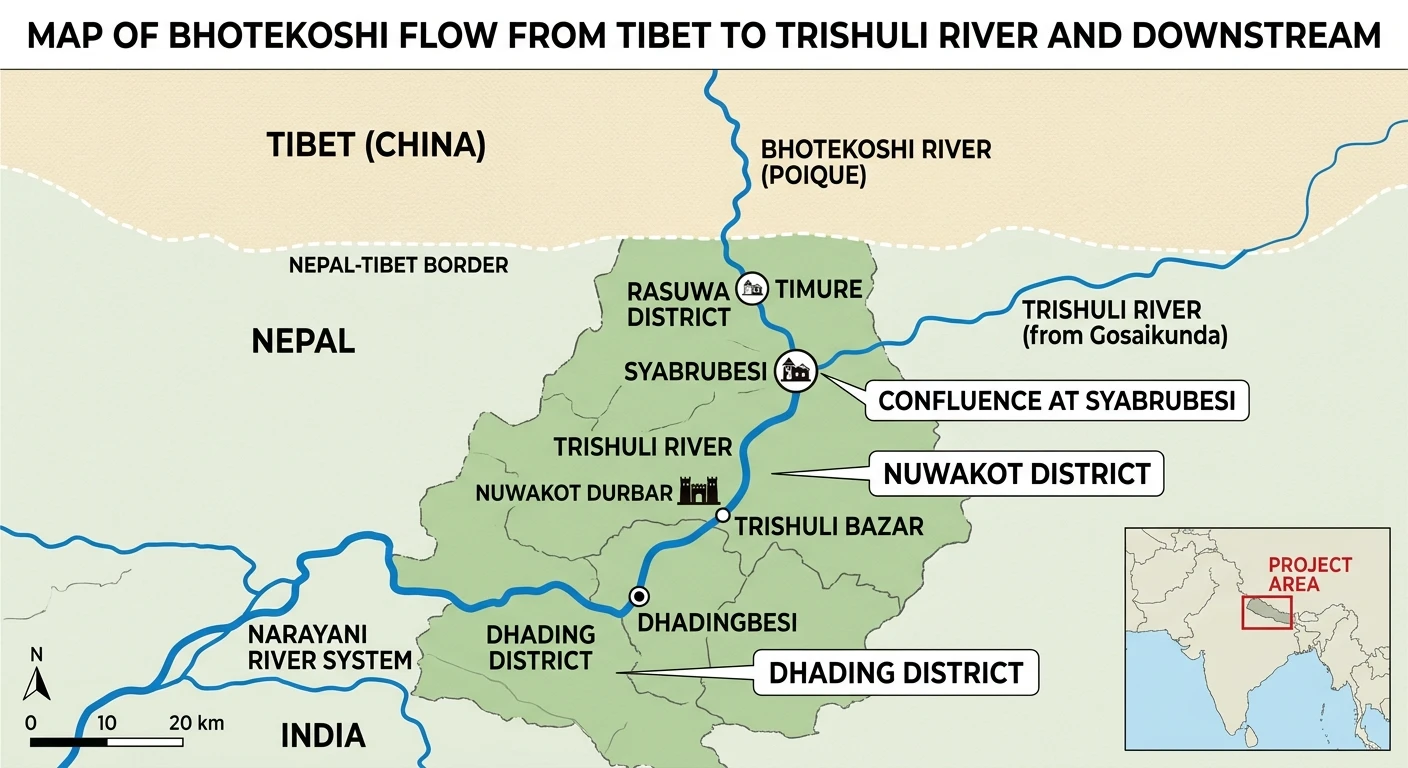
Because the Bhotekoshi feeds into the Trishuli River, authorities issued high-risk advisories for communities living along the riverbanks in Rasuwa, Nuwakot, Dhading, Gorkha and Chitwan. Residents near the river have been urged to move to higher ground and stay away from the banks. The Nepal Army, Armed Police Force and Nepal Police have been mobilised for search, rescue and relief.
Not the first: Rasuwa’s recent flood history
This is the second major flood disaster to strike this border area in just over a year. In July 2025, a flash flood on the Bhotekoshi/Lhende near Rasuwagadhi killed several people and damaged the border infrastructure and dry port. Repeated events highlight how vulnerable this Nepal–China border corridor has become to sudden, cross-border floods.
How to stay safe and help
- If you are near the Trishuli or Bhotekoshi: move away from the riverbanks to higher ground and follow instructions from local authorities.
- Avoid rumours: rely on official updates from the Nepal Police, Nepal Army and district authorities; casualty numbers change quickly in the first hours.
- Help responsibly: donate only through established, verified relief organisations rather than unverified online appeals.
Frequently asked questions
What happened in the Rasuwa flood 2026?
On 26 August 2026, a massive flash flood surged down the Bhotekoshi River from the Tibet side into Rasuwa, hitting Timure and Syabrubesi, killing at least eight people and damaging hydropower projects, markets, roads and bridges.
What caused the Bhotekoshi flood?
Experts suspect a Glacial Lake Outburst Flood (GLOF) in Tibet, because the surge came suddenly from across the border without heavy local rainfall. Investigations are ongoing.
Which areas were affected by the Rasuwa flood?
Timure and Syabrubesi in Rasuwa were hit directly. Downstream districts along the Trishuli — Nuwakot, Dhading, Gorkha and Chitwan — were placed on high alert.
Which hydropower projects were damaged?
Reports indicate damage to the 111 MW Rasuwagadhi, 78 MW Sanjen Khola and 60 MW Upper Trishuli 3A projects, among others.
How many people died in the Rasuwa flood?
At least eight deaths had been confirmed as of this update, with several people missing including nine Armed Police Force personnel. This is a developing story and the numbers may rise.
This is a developing, sensitive story; casualty and damage figures are changing and some reports are unverified. Please rely on official sources for the latest. Sources: The Kathmandu Post, Al Jazeera, The Guardian, ReliefWeb.


ข้อมูลชุดนี้ อ่านแล้วเข้าใจง่าย ครับ
ดิฉัน ไปเจอรายละเอียดของ ข้อมูลเพิ่มเติม
ดูต่อได้ที่ เว็บ betflix13
ลองแวะไปดู
มีตัวอย่างประกอบชัดเจน
ขอบคุณที่แชร์ บทความคุณภาพ
นี้
และหวังว่าจะมีข้อมูลใหม่ๆ มาแบ่งปันอีก