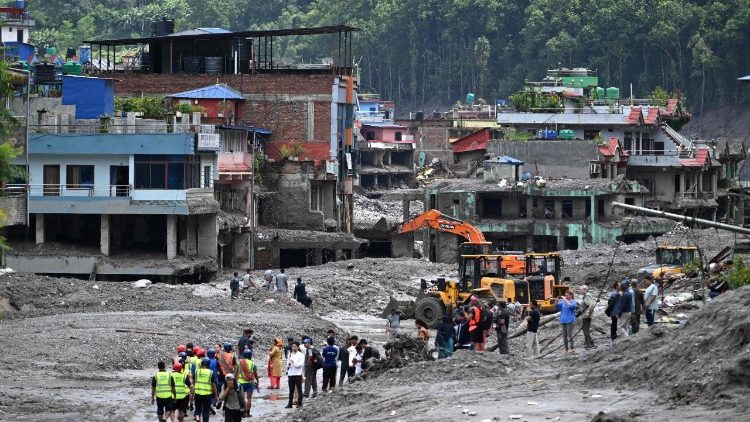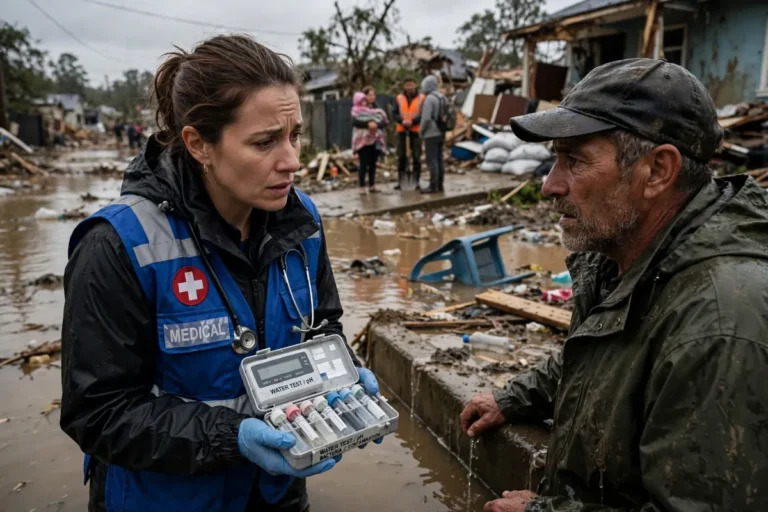
Nepal is among the countries most severely affected by climate change. Due to climate change, a glacial lake outburst flood originating from Rasuwa’s Bhotekoshi river since Wednesday morning has swept away hundreds of people, leaving them missing, and destroyed billions worth of physical property. Search and rescue operations for the missing are ongoing.
It is not just Nepal; sympathy for this disaster has poured in from around the world. However, data from the past 10 years clearly shows that Nepal, which has the least role in climate change, is bearing the greatest damage.
Due to the climate crisis, glacial lakes are rapidly melting and bursting, and mountains are turning into black rocks. Similarly, the series of droughts, unexpected heavy rainfall, and devastating floods and landslides in the Chure and Madhes regions have not stopped.
Nepal’s Fight for Climate Justice on the Global Stage
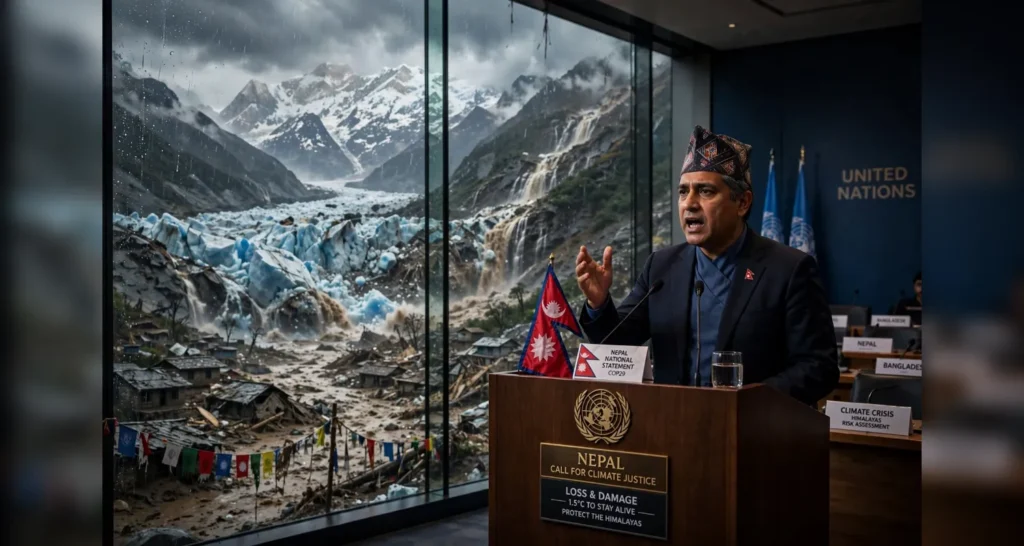
Amidst this severe crisis, Nepal needs to strongly advance the issue of ‘climate justice’ against the injustice it faces on international platforms. To bring Nepal’s voice, as a country affected by climate change, to the world, then-Prime Minister Pushpa Kamal Dahal ‘Prachanda’ made a historic initiative.
Addressing the 78th session of the United Nations General Assembly in September 2023 and during his meeting with UN Secretary-General António Guterres, Prachanda prominently raised Nepal’s issues, stating it was ‘the irony of the innocent suffering punishment’.
Prachanda powerfully voiced from the UN rostrum that Nepal, despite not contributing to greenhouse gas emissions, is paying the price for the greatest crime of global temperature rise. He stated, ‘We are suffering the punishment for a crime we did not commit. Our Himalayas contribute to balancing the world’s temperature, but they are melting rapidly. This is an injustice to Nepal, and we should be provided with compensation and climate finance in the form of grants, not loans.’
Prachanda demanded the immediate availability of the $100 billion climate fund announced by rich and developed countries and invited UN Secretary-General Guterres to personally witness Nepal’s melting glaciers.
Accepting then-Prime Minister Prachanda’s invitation, UN Secretary-General António Guterres visited Nepal in October 2023 (Kartik 2080 BS). He traveled to Khumjung in Solukhumbu and observed the Everest region, expressing sorrow that small and developing nations like Nepal have to bear the consequences of pollution caused by large and developed nations. Guterres stated, ‘The environment has been polluted due to the large and developed nations of the world, but Nepal is directly bearing its brunt. The global community must take immediate action to save the Himalayas and stop this crisis.’
During the same visit, witnessing the dire situation in the Himalayan region, Guterres addressed the global community with a strong appeal to ‘Stop the Madness’ and save the mountains and Himalayan settlements.
Similarly, then-Prime Minister Madhav Kumar Nepal also held a cabinet meeting at Kalapatthar, at an altitude of 5,242 meters, on December 4, 2009. This meeting, held on the eve of the Copenhagen Climate Summit, drew global attention to the fact that Nepali Himalayas were melting due to global temperature rise, posing a crisis for drinking water and livelihoods for millions of people.
Then-Prime Minister Sher Bahadur Deuba also maintained Nepal’s stance at the COP26 World Leaders’ Summit in Glasgow, United Kingdom, on November 1-2, 2021, stating that as a mountainous country, Nepal is at high risk from climate change and that ‘loss and damage’ resulting from it should be addressed internationally.
Then-Prime Minister KP Sharma Oli, at the 79th session of the United Nations General Assembly in New York, USA, on September 26, 2024, drew global attention to the rapid melting of glaciers, unexpected monsoon changes, and increased natural disasters like floods and landslides, which have caused significant loss of life and property in Nepal.
Furthermore, Nepal’s Foreign Ministers have consistently raised the issue of climate change in various sessions of the United Nations and bilateral meetings. Foreign Minister Pradeep Kumar Gyawali (2020-2021) put forward the concept of Nepal’s own global platform, the Sagarmatha Dialogue, leading discussions on climate change and the mountain economy.
Foreign Minister Dr. Narayan Khadka stated at the 77th UN General Assembly and UN Forum in 2022 that Nepal is caught in the grip of climate change, and the melting of glaciers would put billions of people in downstream areas at risk.
Similarly, Foreign Minister Dr. Arzu Rana Deuba initiated efforts to build a common voice for Himalayan countries in high-level UN meetings and bilateral talks, and also engaged in diplomatic lobbying to make mountain issues a main agenda at COP conferences.
Nepal’s Climate Crisis in Numbers
Statistics also reveal the extent of the crisis Nepal is facing. According to data from the Ministry of Home Affairs, in the six years from 2018 to 2024, Nepal experienced 32,375 disaster incidents. These incidents resulted in 2,996 deaths, 446 missing persons, and direct economic damage amounting to NPR 23.6 billion.
A study by the Department of Hydrology and Meteorology projects that Nepal’s average annual temperature will increase by 2.4 to 4.3 degrees Celsius by the end of this century. Under high emission scenarios, this increase could reach up to 7 degrees Celsius. Temperatures have already reached 45 degrees Celsius in the Terai and 35.3 degrees Celsius in Kathmandu. Annual average rainfall is projected to fluctuate by 7 to 37 percent, with monsoon rains becoming even more devastating.
According to a report by the Ministry of Forests and Environment, the Green Climate Fund, the Food and Agriculture Organization, and the ‘Building Resilience in Nepal’s Churia Region’ project, climate disasters have reached extreme levels not only in the Himalayan region but also in the Churia and Madhes regions.
Among the 26 river systems studied in the Churia region, Kamala (North and South), Kamala Belsot Jogiya, Lakhandehi, and Ratu river systems are listed as ‘highly vulnerable’. In these areas, on one hand, there is a severe problem of drought and wildfires, while on the other, sudden floods and soil erosion are devastating agriculture and settlements.
Nepal is tackling disasters at the local level through pond construction, embankments, and early warning systems, using its own resources and capabilities. However, this crisis is not one that Nepal can solve alone. Dr. Gentle, a climate and environment expert, stated, ‘To address the increasing impacts of climate change and disasters, Nepal needs to further emphasize national and international initiatives and advocacy, as well as technical and institutional capacity building. Reviewing the efforts made so far to mainstream Himalayan issues internationally, the combination of political leadership’s initiative and willpower, along with the knowledge of experts in the relevant fields, is crucial.’